
For most HR vendors, in-person expos produce better leads, and virtual expos produce cheaper ones. Hybrid sits in the middle and suits only some budgets. That’s the short answer. The longer one depends on what you sell, who you’re selling to, and how much patience your finance team has.
The question matters more now than it did five years ago. Roughly 69% of event leaders report flat or declining operating budgets, so every booth decision gets scrutinised. At the same time, virtual events are not going anywhere, with market projections stretching well into the 2030s. And about 49% of trade shows now carry some hybrid or virtual component.
This guide weighs both formats across cost, reach, relationships, lead quality and data. Then it tells you when to pick which, and how to prepare. I lean in-person. I’ll say why.
Which Format Costs Vendors More?
In-person, no contest on the sticker price. But the sticker price isn’t the whole story, and I’ve watched vendors fool themselves in both directions.
Booth and Travel Costs
Exhibit space rental alone eats about 40% of what exhibitors spend at a physical show. Add the booth build, shipping, flights, hotels, per diems and staff time away from the pipeline, and a mid-sized HR conference becomes a serious line item.
For a vendor in Lagos eyeing a show in Chicago or London, add visa fees, exchange rate pain and the risk that your banner stand gets stuck in customs. Real money.
Platform Fees and Digital Assets
Virtual looks cheap by comparison. You pay platform fees, maybe a sponsorship tier, and you produce demo videos, brochures and a decent booth landing page. Cost-per-lead is where virtual formats usually shine, because travel, lodging and shipping vanish.
Hidden Costs on Both Sides
Neither format is as clean as the brochure says. Watch for these:
- Staff hours spent prepping decks, scripts and demo environments for a virtual hall that may draw thin traffic.
- Booth giveaways and printed collateral that end up in hotel bins.
- Follow-up labour, since a thousand scanned badges still need real humans to call them.
- Platform add-ons, such as extra lead retrieval licences or premium placement, that the first quote didn’t mention.
Cheap and effective are different words. Remember that.
Which Format Reaches More HR Buyers?
Virtual wins on raw reach. It removes geography, so your distributed sales reps can cover continents without boarding a plane, and an HR generalist in Port Harcourt can wander into your booth during lunch.
Hybrid events have even recorded around 30% higher attendance than legacy in-person-only conferences. Reach is real.
But reach of whom? A career fair or HR conference attendee who walks a physical hall has already paid for a ticket, travelled, and blocked out a schedule. A virtual registrant might have clicked “register” at 11 p.m. and never logged in. Registered is not present. Present is not paying attention.
So count the right audience, not the biggest one. If your buyers are HR leaders at mid-to-large organisations with real budgets, a smaller room of them beats a large digital crowd of students, job seekers and the merely curious.
Where Do Vendors Build Stronger Relationships?

In person. I’ll defend that without apology.
You can demo your HR tech on a live screen, watch the prospect’s face when the payroll integration works, and read the hesitation when you mention pricing. Analysts at Angelina Expo Center make the point that twenty uninterrupted minutes face-to-face puts a prospect much further down the buyer’s journey than a click through a digital directory.
Then there’s the coffee queue. The hallway chat after a keynote. The “oh, you’re also dealing with compensation benchmarking?” moment that starts a deal. Trust is hard to build online, because spontaneous contact barely exists on a platform.
Online, people half-read your page while answering Slack messages. That’s not engagement. That’s screen fatigue with analytics attached.
Virtual does have one relationship advantage: it’s easier to follow up with a quiet person who never would have approached a physical booth. Small win. Don’t oversell it.
Which Format Generates Better Leads?
Lead quality tilts in-person. Lead volume tilts virtual. Mixing the two up is how vendors report a “record event” and then wonder why the quarter missed.
Industry figures suggest in-person booth interactions produce four to five times more qualified B2B leads than standard virtual booth engagement. And a striking 95% of exhibitors say they’d choose physical over virtual-only when forced to pick.
| Factor | Virtual HR Expo | In-Person HR Expo |
|---|---|---|
| Lead volume | High, mostly top-of-funnel | Lower, more selective |
| Lead quality | Self-qualified clicks and downloads | Mid-to-late-stage conversations |
| Sales cycle impact | Slower, needs heavy nurturing | Faster, since demos happen on the spot |
| Cost per lead | Low | High |
| Cost per closed deal | Often higher than expected | Often lower than expected |
A pile of brochure downloads isn’t a pipeline. I’d take thirty serious conversations over three hundred anonymous clicks, any day.
What Data Can Vendors Actually Measure?
Here virtual genuinely beats the physical floor. Platforms log booth traffic, dwell time, document downloads, chat transcripts and video views. Sovereign Exhibitions notes the same: structured attendee data arrives automatically.
In-person measurement is messier. Badge scans, manual notes, CRM tags, maybe a QR code on a demo card. You can still get good data, but you have to build the system yourself.
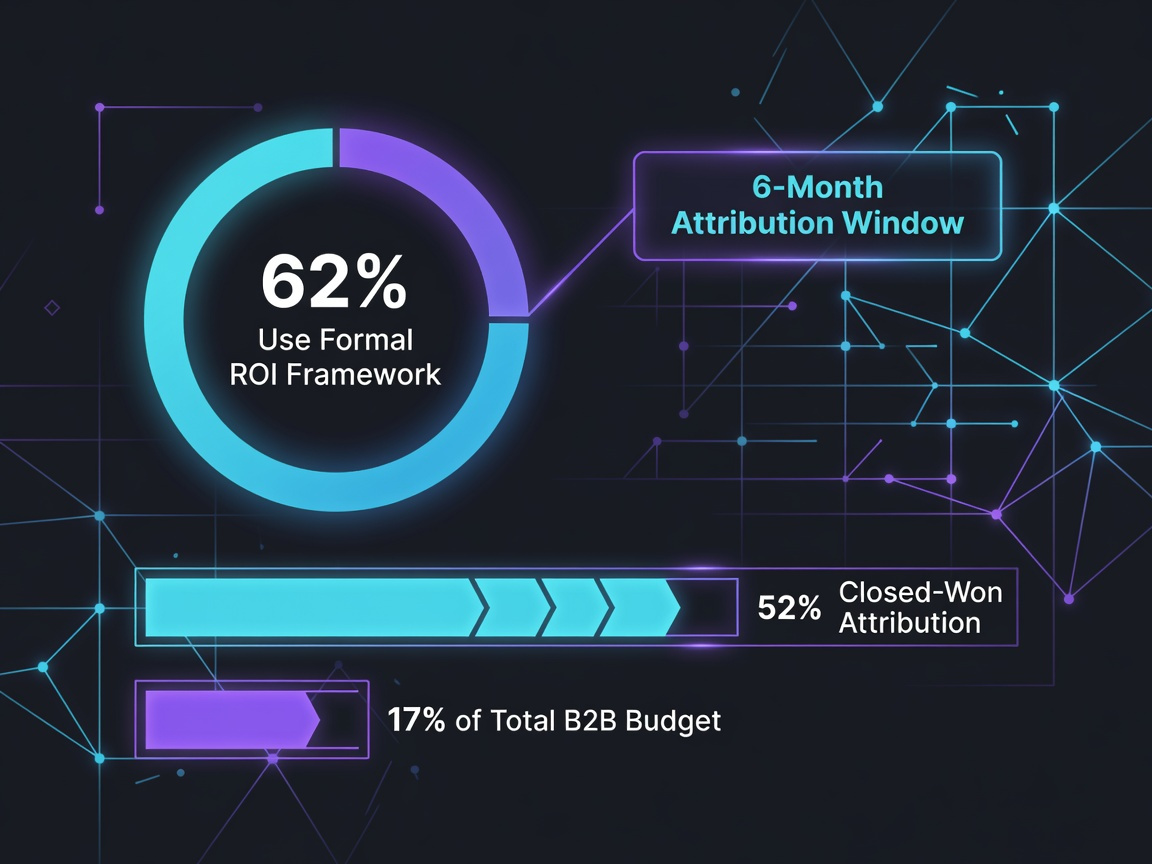
Now the uncomfortable bit. About 62% of exhibitors use a formal ROI framework, and roughly two-thirds of those apply a six-month attribution window before crediting a closed deal to an expo. B2B events also capture around 52% of closed-won attribution for marketers who track multi-channel paths, and they claim about 17% of total B2B marketing budgets.
Translation: judging an expo by next-week leads is a mistake. Measure what turns into revenue, not what looks tidy on a dashboard.
When Should Vendors Choose a Virtual Expo?
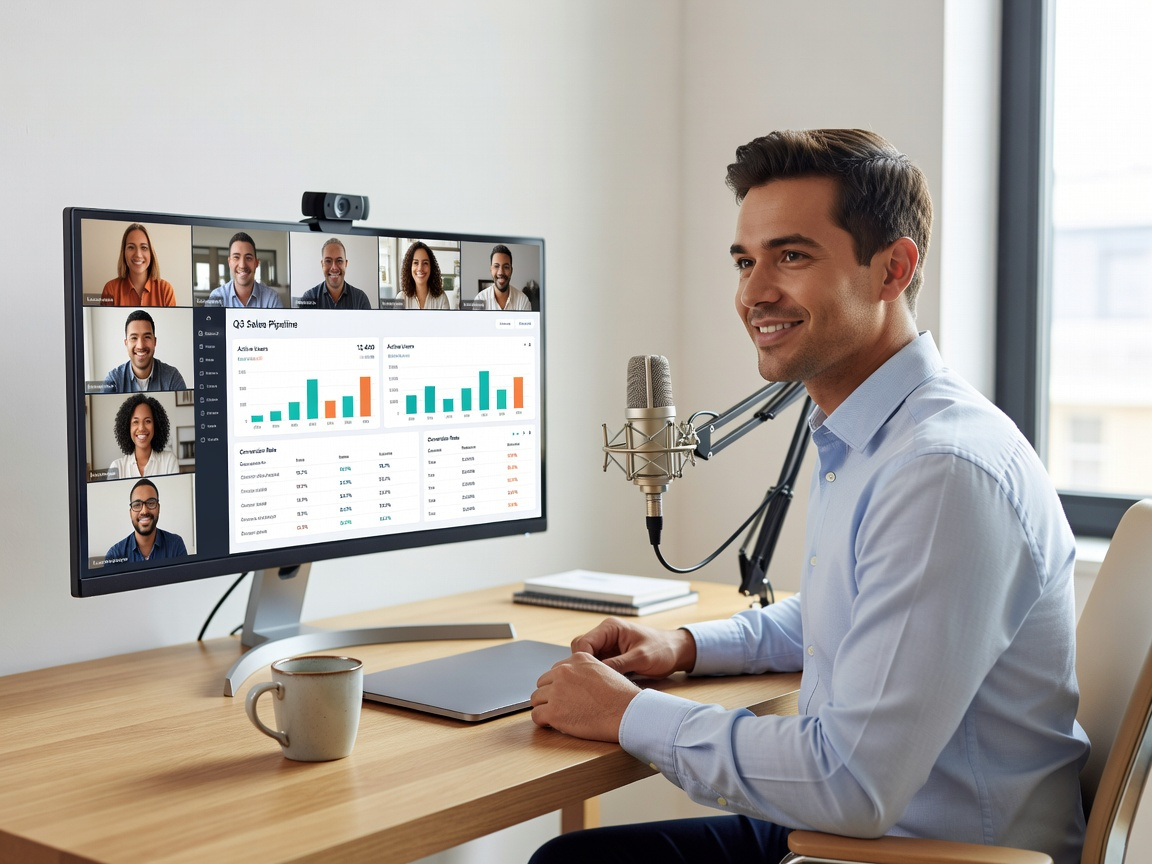
Virtual makes sense in specific situations. Not all of them are glamorous.
- Your budget is thin and you need visibility, not closing power.
- You sell a standardised SaaS product with a short, self-serve demo.
- Your audience is spread across several countries, and flying to all of them is absurd.
- You’re testing a new market, such as a virtual career fair, before committing real money.
- You’re supporting an HR Florida or HRPA-style regional audience that you can’t visit this year.
Virtual is cheap reach. Use it as cheap reach. Don’t ask it to behave like a sales floor.
When Does an In-Person Expo Work Better?
When the deal is complex, the ticket is big, or trust is the real product. Think enterprise HRIS, compensation platforms, compliance software, leadership development providers. Anything where a buyer wants to poke at the thing and look you in the eye.
Large annual conferences with strong attendee quality, like the HRPA annual conference or Hacking HR events, also suit physical booths. The same goes for shows where HRCI credits and recertification sessions pull in senior professionals who would otherwise skip a sales pitch.
My own rule: spend on fewer, better-chosen in-person expos and follow up hard. Ten shows done thinly lose to three shows done properly.
Is a Hybrid Expo Worth It?
Sometimes. Reports suggest around 78% of corporate organisers favour hybrid models, and the logic is sound: a physical booth for deal-making, streamed demos and digital downloads for everyone who couldn’t travel.
The catch is split attention. Your team can’t staff a hall and a chat window equally well. If you lack the headcount, hybrid becomes two half-efforts. Zoho’s overview of virtual versus physical events flags the same fatigue problem on the digital side.
Worth it if you can dedicate one person only to the virtual layer. Otherwise, pick a lane.
How Do You Prepare for the Right Expo?
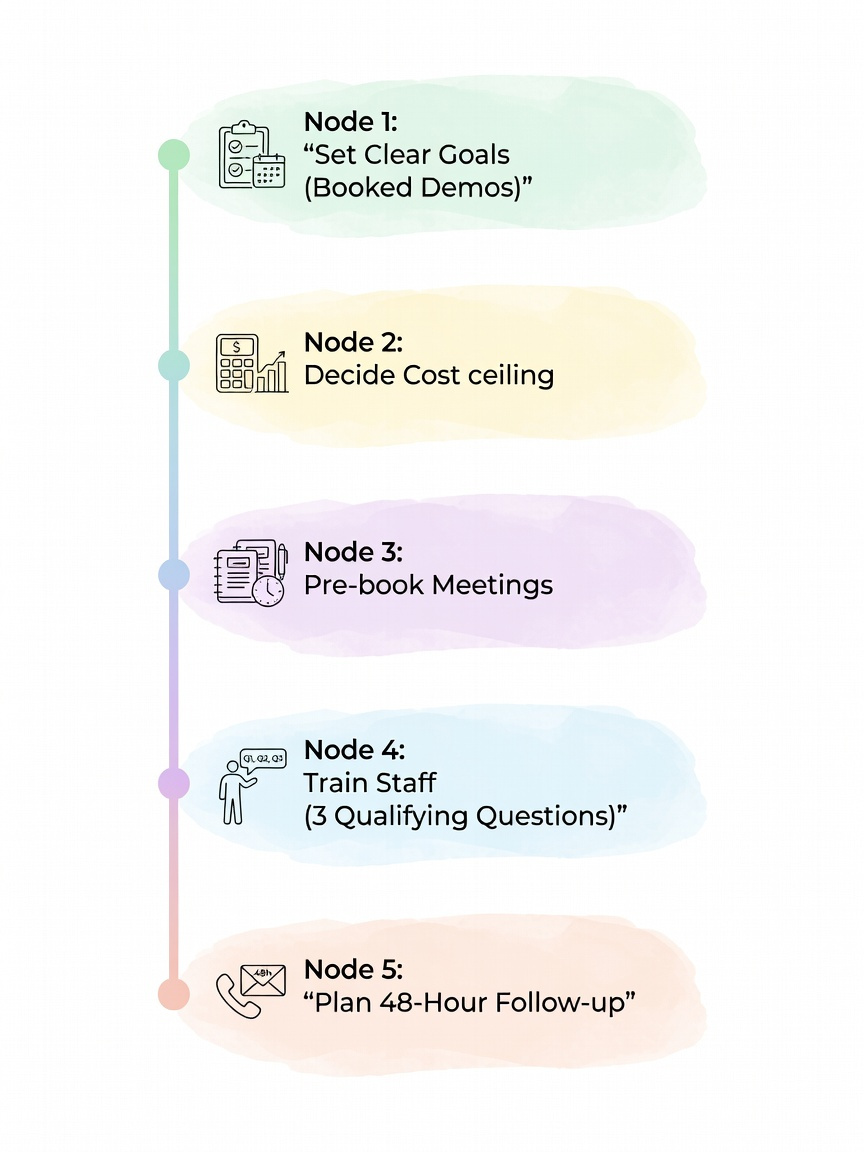
Start with the audience, not the venue. Ask the organiser for attendee job titles, company sizes, last year’s exhibitor retention and buyer-to-vendor ratios. Vague answers are an answer.
Then work through this sequence:
- Set one clear goal, such as booked demos, not “brand awareness.”
- Decide your cost ceiling and expected cost per qualified lead.
- Pre-book meetings with target accounts before the doors open.
- Train booth staff to qualify in three questions, not pitch for ten minutes.
- Plan follow-up within 48 hours and a six-month attribution window.
Finally, debrief honestly. Did the right people show up? If not, don’t return, however nice the lanyards were.
FAQ
Are virtual HR expos worth it for vendors?
Yes, for awareness, low-cost reach and early-stage lead capture. They rarely replace in-person shows for closing complex deals.
Which format gives better ROI?
Virtual usually wins on cost per lead. In-person often wins on cost per closed deal, especially for higher-priced HR technology.
Is hybrid always the best option?
No. It works when you have staff for both layers. Without that, you split attention and weaken both.
How long should I wait before judging expo results?
Around six months. Many HR buying cycles are longer than a quarter, so early numbers mislead.
Conclusion
Virtual expos give you reach, tidy analytics and a gentle budget. In-person expos give you trust, live demos and leads that actually buy. Hybrid tries to give you both, and it can, if your team is big enough to carry it.
My view stays the same. Pick fewer in-person shows, choose them carefully, and chase every lead like it owes you money. Use virtual for cheap visibility, and never mistake a high lead count for a healthy pipeline.
Which format has actually paid you back? That’s the one worth repeating.