
Most workforce productivity events look the same: a keynote on AI trends, a few panels about “the future of work,” and a networking hour. Attendees leave with notes but no real plan. Organizers call it a success because seats were filled, not because anything changed.
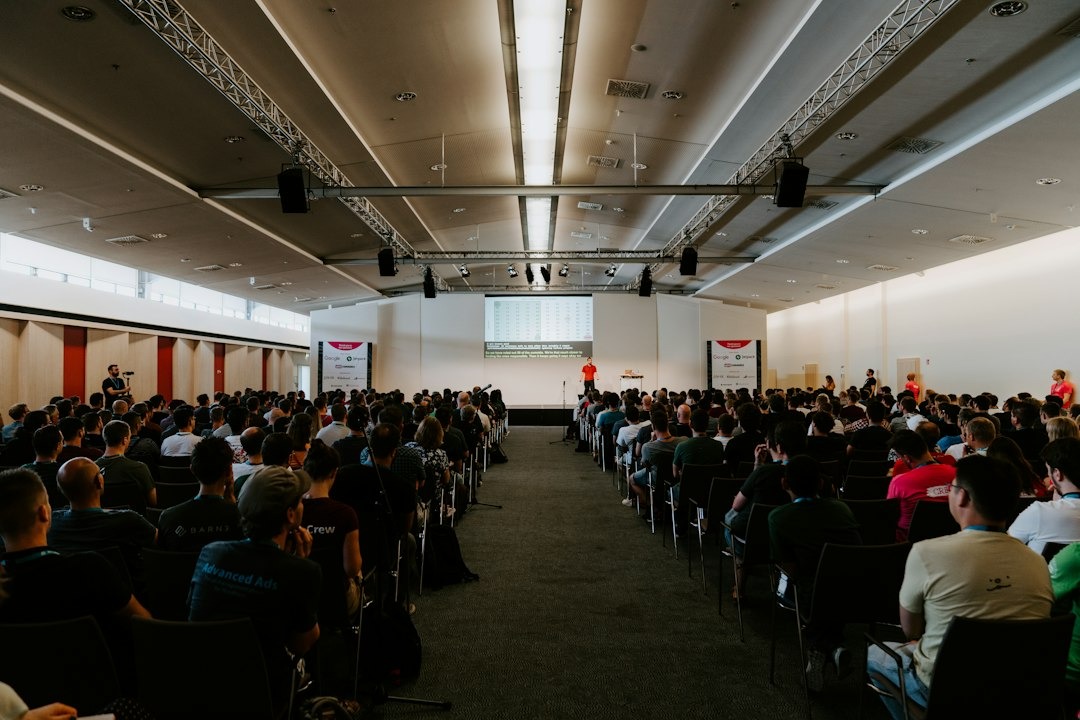
That’s the disconnect. Productivity is measurable, but most events aren’t designed to measure anything. Generic “top trends” content tells planners what’s happening in the workforce, but it doesn’t tell them how to build an event that produces results.
A successful workforce productivity event rests on three pillars: a clear agenda design, a measurement framework built before the event starts and a human-centered experience that doesn’t treat people like data points. This guide walks through each step from defining your event’s core idea to proving its ROI afterward.
Step 1: Define Your Event’s Productivity Thesis
Before you book a venue or invite a speaker, answer one question: What is this event actually arguing? That’s your productivity thesis; a single, specific point of view that every session, speaker, and outcome should support.
A thesis is not a theme. “The Future of Work” is a theme. “AI can cut administrative HR work by 40%, but only if leaders redesign roles around it” is a thesis. One gives you a broad umbrella; the other gives you a filter for every decision you make afterward.
To build yours, start with your audience’s actual pain points, not industry buzzwords. If your attendees are mid-market HR leaders drowning in manual scheduling and reporting, your thesis might center on automation ROI. If they are L&D professionals struggling with disengagement, your thesis might focus on skills-based development replacing traditional training.
Examples of strong theses and the agendas they produce:
- “Well-being metrics are the missing half of productivity measurement.” → Agenda built around ethical monitoring, burnout data and rest-as-performance sessions.
- “AI adoption without human oversight increases legal and reputational risk.” → Agenda built around bias audits, governance and case studies.
A clear thesis prevents content sprawl, the tendency to add “one more session” until the agenda becomes a grab bag. It also attracts the right speakers and attendees, because people can immediately tell whether the event matches their problem. Organizations that clarify their workforce priorities before designing programs, a step HR Expo Africa emphasizes when helping companies translate broad productivity goals into specific, actionable priorities, tend to run tighter, more credible events.
Step 2: Design the Agenda; Balancing AI, Humans and Well-being
Once your thesis is set, build an agenda around three tracks. Skipping any one of them makes the event feel one-sided and reduces its credibility with a workforce audience that is increasingly skeptical of AI-only or wellness-only messaging.
The AI Track
This track should focus on practical application, not abstract forecasting. Strong topics include algorithmic bias audits, automated on-boarding workflows and predictive analytics for turnover risk. Prioritize live demos and real case studies over theory-heavy slide decks, attendees remember what they see work, not what they are told might work.
Recommended format: A 45-minute hands-on workshop followed by 15 minutes of open Q&A.
The Human Leadership Track
Productivity gains from technology mean little if leadership can’t sustain them. This track should separate leadership skills (vision, coaching, trust-building) from management skills (scheduling, performance tracking, compliance). Sessions on coaching frameworks, skills development pathways, and culture-building initiatives fit here.
Recommended format: Panel discussion with speakers from different industries or company sizes to avoid a single-narrative echo chamber.
The Well-being & Productivity Paradox Track
This is the track most events skip and the one attendees increasingly demand. Cover burnout, mental health and the risks of constant monitoring tools that quietly erode trust. Reframe rest as a productivity input, not a productivity tax. Discuss ethical metrics: what should and shouldn’t be measured about a person’s workday.
Recommended format: Debate-style session or interactive roundtable, which surfaces disagreement rather than papering over it with consensus soundbites.
Balancing these three tracks signals to attendees that your event understands productivity as a system involving technology, leadership and human limits.
Step 3: Choose Your Event Format(Virtual, In-Person or Hybrid)
Format should be chosen based on your goals. Each option carries hidden costs:
- Virtual events lower travel costs and widen reach but often produce shallow engagement, attendees multitask and networking connections rarely form organically.
- In-person events create stronger relationships and higher-quality feedback but come with real costs in time, staff energy and environmental impact, costs rarely factored into simple budget spreadsheets.
- Hybrid events offer flexibility but require double the planning effort: separate content pacing, tech support and engagement strategies for each audience.
Format also affects what you can actually measure. In-person events allow for direct observation, badge-scan data and face-to-face follow-up conversations. Virtual events generate cleaner digital data, session watch-time, poll responses, chat engagement but weaker signals about whether people actually absorbed anything. Decide your format only after you know what success needs to look like.
Step 4: Build a Measurement Framework Before the Event Starts
Measurement can’t be bolted on after the fact. It has to be designed alongside the agenda, with clear checkpoints at three stages.
Pre-Event Baseline Metrics
Survey attendees before the event on their current challenges, tool usage and satisfaction levels. Establish benchmarks for things like time spent on administrative tasks, engagement scores and turnover rates. Without a baseline, you have no way to prove change happened.
During-Event Engagement Metrics
Track session attendance, Q&A participation and networking connections made. Use live polls but to capture immediate learning and more importantly, implementation intent. Then ask attendees directly whether they plan to act on what they just heard.
Post-Event Impact Metrics
Send a 30-day follow-up survey asking what changes attendees actually implemented. Track real productivity improvements where possible. This reduced admin time, faster hiring cycles and improved retention. Then calculate ROI using a straightforward formula:
ROI = (Productivity gains − Event cost) / Event cost × 100
This turns “the event felt valuable” into a number leadership can actually evaluate.
Step 5: Create a Post-Event Productivity Impact Report
The event doesn’t end when the last session closes. Build a shareable Productivity Impact Report that documents:
- Key takeaways from each track
- Action items attendees committed to
- Changes actually implemented in the 30 days after
- Measured results tied back to your ROI formula
Aggregate this data across attendees to start building industry benchmarks such as average admin-time savings, common bias-audit findings, typical adoption timelines. Over multiple events, this report becomes more than a recap; it becomes a marketing asset that proves your event produces outcomes, making it easier to attract sponsors and speakers for the next one.
Conclusion
Events that win in 2026 won’t be the ones with the flashiest AI demo. They will be the ones that balance technology with humanity, treat measurement as core design rather than an afterthought and leave attendees with a report proving something actually changed. Start with your thesis, build your tracks, measure before you begin and turn every event into evidence for the next one.